Fast answer
The answer before the background
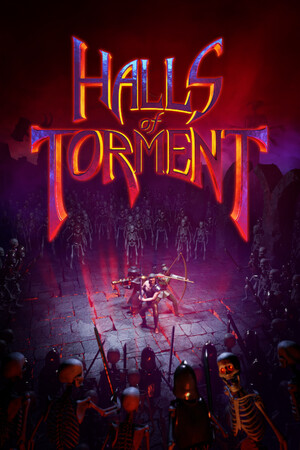
This halls of torment review finds the original game best suited to players who want compact horde-survival runs with a heavier late-1990s action-RPG frame: named heroes, main weapons, equipment retrieval, quests, traits, abilities and endgame modifiers. It is less suitable for someone seeking narrative exploration, official co-op or identical cross-platform progression. The Premium mobile port is closest to that structure; the free mobile adaptation changes run length, economy and progression.
Audience fit
The appeal is build diagnosis inside a readable progression ledger
A run asks more than whether the hero can survive a timer. The player combines a main weapon, independent abilities, eligible trait branches, equipment and potion-controlled choices, then turns quest and Well results into later options. That gives failed attempts an analytical afterlife: the next run can target the missing system instead of only repeating for a higher score.
The trade-off is reference complexity. Marks, rarity variants, artifacts, Agony, the Vault, free-update content and paid DLC create many boundaries. Players who want immediate mechanical transparency may need the compendium and quest boards. Players who enjoy uncovering interactions receive a larger decision space than the simple movement-only surface first suggests.
Comparison
Compare the control and progression loop, not the survivor label
| Game | Distinctive emphasis | Choose it when |
|---|---|---|
| Halls of Torment | Action-RPG presentation, equipment retrieval, class traits and quests | You want Diablo-like visual language around short survival runs. |
| Vampire Survivors | Its own stage, weapon-evolution and meta-progression rhythm | You want that title's broader arcade lineage and content structure. |
| Brotato | Short waves plus a between-wave shop and character restrictions | You prefer repeated shop decisions and compact arenas. |
| Death Must Die | Different action control and item/build framing | You want its particular movement, attack and divine-power loop. |
| Soulstone Survivors | Another ability-heavy progression model | You prefer its skill density and meta systems. |
FAQ
Common questions
Is Halls of Torment worth it?
It is a strong fit for players who enjoy short horde runs, action-RPG presentation, quest-led unlocks and detailed build interactions.
Is it like Vampire Survivors?
They share horde-survival structure, but Halls of Torment emphasizes its own heroes, class traits, retrieved equipment and late-1990s action-RPG presentation.
Should I buy Premium mobile or use free?
Choose Premium for the classic longer-run structure; choose free only if its shorter battles, economy, leaderboards and purchases are the product you want.
Is this a hands-on review?
No. It is a transparent editorial synthesis of official features, releases and clearly labeled comparison criteria.
Sources
What we checked
Official listings establish current availability and product facts. Community pages are used for mechanics and build history, then labeled separately.
- OfficialOfficial Steam store
- OfficialOfficial Chasing Carrots announcements
- OfficialOfficial Premium Android listing
- OfficialOfficial Premium iPhone and iPad listing
- OfficialOfficial free Android adaptation
- OfficialOfficial free iPhone and iPad adaptation
- OfficialOfficial Xbox listing
- OfficialOfficial PlayStation listing