Fast answer
The answer before the background
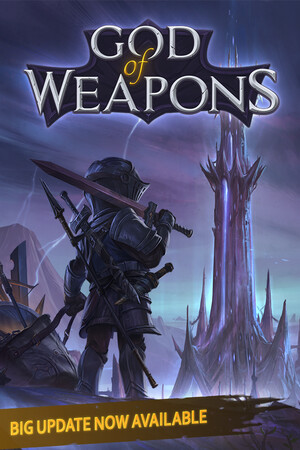
This god of weapons review finds the clearest appeal in combining survivors-style automatic combat with a constrained inventory puzzle. A run asks not only which stat is stronger, but whether weapons, accessories, sets and future upgrades can physically fit. That creates meaningful shop decisions and strong replay value for players who enjoy build planning. It can frustrate players who dislike random shops, repeated unlock challenges or geometry that invalidates an otherwise powerful item.
Fit
The inventory is a rules engine, not a cosmetic grid
The official description centers automatic weapon attacks, dodging, loot and limited inventory space. The community databases show why that matters: weapon scaling, tiers, shapes, tags, item adjacency and character restrictions interact. Buying a high-rarity piece can make the build worse when it blocks two set edges or funds the wrong stat.
The system rewards pausing between floors to repack and compare. Players seeking continuous action may experience the shop as interruption. Players who like Backpack Hero-style spatial planning or Brotato-style stat construction gain a second layer of decisions inside the familiar arena-survival loop.
Trade-offs
Randomness creates variety and maintenance cost
| Strength | Trade-off | Best fit |
|---|---|---|
| Many character aspects | Unlock chains and balance can be hard to read | Players who enjoy experiments. |
| Spatial inventory | A good item can be unusable by shape | Players who value constrained planning. |
| Short floor cycle | Repeated shops can slow action | Players comfortable with build pauses. |
| DLC and free update | Guides can mix paid and free systems | Readers willing to check product scope. |
| Achievements unlock content | Completion tasks can dictate awkward runs | Goal-oriented progression players. |
Comparison
God of Weapons vs Brotato is geometry versus direct stat economy
Both games use compact arena runs, automatic attacks, shops and character-defined builds. God of Weapons makes physical placement and adjacency a central constraint; Brotato more directly emphasizes weapon slots, item economy and character modifiers. The better choice depends on whether rearranging shapes feels like strategic expression or administrative friction.
A Metacritic number or store rating can summarize sentiment but cannot answer that fit question alone. Read current reviews for performance on the intended platform, then compare the loop: time spent fighting, time spent shopping, randomness tolerance, desired co-op support and interest in spatial optimization.
FAQ
Common questions
Is God of Weapons worth it?
It is a strong fit for players who enjoy automatic arena combat plus inventory geometry, set planning and repeated unlock experiments.
How is it different from Brotato?
God of Weapons makes backpack shapes and adjacency central, while Brotato focuses more directly on weapon slots, stats and shop economy.
Is this a hands-on review?
No. It is a transparent source-derived assessment using verified product features and stated comparison criteria.
Does the DLC change the recommendation?
It adds characters and systems, but the base game's inventory loop remains the main purchase decision.
Sources
What we checked
Official listings establish current availability and product facts. Community pages are used for mechanics and build history, then labeled separately.
- OfficialOfficial Steam listing
- OfficialOfficial Steam announcements
- OfficialOfficial Xbox listing
- OfficialOfficial PlayStation listing
- OfficialOfficial Eternal Nightmare DLC
- CommunityCommunity mechanics directory